
The FCC Form 470 is the first formal step in the E-rate competitive bidding process. It opens the door to vendor bids and shapes every filing that follows. In our work supporting state-level applicants, we have seen the same practices consistently separate orderly filings from difficult ones. The following five tips reflect those experiences.
-
Build the timeline backward
Begin with the date by which services must be in place, then work in reverse. The mandatory 28-day posting period must elapse before a vendor is selected and a contract signed, and this requirement alone shapes the entire schedule. State-level procurements often involve budget approvals, legal review, and multiple stakeholders, each of which can extend the timeline. Starting earlier than seems necessary leaves room to absorb the unexpected.
-
Describe the need, not the vendor
A well-written request attracts competitive, comparable bids. A poorly written one either confuses bidders or appears to favor a particular provider. Describe the service, capacity, performance expectations, and contract term rather than a preferred product or company.
Consider the difference between these two descriptions:
- Weak: “Fiber internet service from our current provider.”
- Strong: “Dedicated fiber internet access at 10 Gbps symmetrical, with a 99.9 percent uptime commitment and the ability to scale to 20 Gbps during the contract term.”
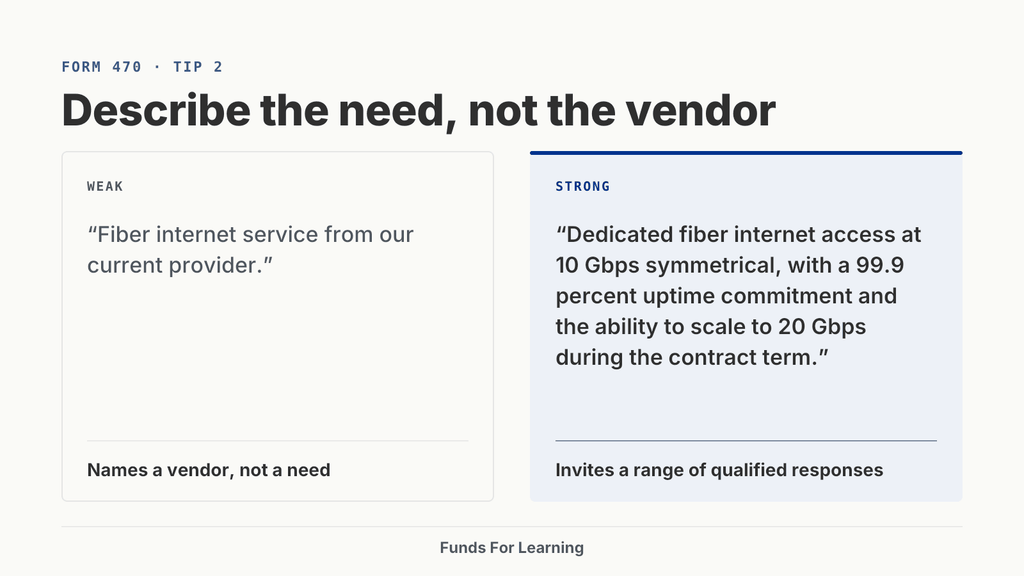
The second invites a range of qualified responses and gives evaluators a clear standard against which to compare them.
-
Gather member requirements early
For consortium and statewide filings, the needs of individual members rarely align perfectly. Collect requirements before drafting, and confirm that your letters of agency (the documents authorizing you to file on each member’s behalf) are current, and decide in advance how differing needs will be addressed within a single request. Resolving these questions up front prevents revisions after posting and helps ensure that bids reflect what members actually require.
-
Establish the evaluation method before bids arrive
Create the bid evaluation matrix before the first proposal is received. Price must be the most heavily weighted factor, and any additional criteria, such as service quality or implementation experience, should be defined and weighted in advance. Setting the method beforehand protects the integrity of the process and makes the final selection far easier to explain and defend.
Equally important is the handling of vendor communication. Provide all bidders with the same information, route questions through a consistent channel, and keep a written record of exchanges. Fairness is easiest to demonstrate when it is practiced from the start.
-
Document every step
Maintain a single, organized file that traces the full path from the Form 470 through the Form 471: the posted request, any vendor questions and responses, the bids received, the completed evaluation matrix, the rationale for selection, and the executed contract. Applicants must retain these records for ten years after the later of the end of the funding year or the service delivery deadline for the funding request, and reviewers may request them long after the filing is forgotten. A complete, well-organized record is the best protection against delays or denials.
Final thought
Most Form 470 difficulties trace back to timing, clarity, or documentation. Attention to those three areas, applied consistently, goes a long way toward a successful funding cycle.
Want to go deeper on any of this? Using procurement to your advantage is one of the topics at our next My E-rate Guides (MEG) webinar on December 3. It’s free, it’s live, and you can bring your questions. Register here.
About the Author: E-rate Guide Todd Lawrence has spent the last 15 years helping schools and libraries get the E-rate funding they need to keep students connected. He got into the work in 2010, when Idaho schools were caught in a state network validity dispute and needed someone to help them recover. Outside of E-rate, he is on the trails or with his wife, kids, and grandchildren.